175
challenges • Ready in 5 minutes
Estimation Challenges
The easiest way to start class. Project a challenge as students walk in, let them commit to a guess, then build the suspense before the big reveal. No prep, no logins—just curiosity from minute one.
Bell-ringer ready
Daily Overview map reveals
Filter by tag
The classroom routine
How to Run One
Estimation is a thinking warm-up, not a quiz. The magic is in the wait—every student commits to a number before anyone hears the answer.
1
Display as they arrive
Project the challenge the moment students walk in. They write their guess on their warm-up paper—silently, no sharing yet.
2
Quiet work · 3–5 min
Students settle into the rest of their warm-up while their estimate sits locked in on paper.
3
Share before the reveal
Stop the class. Ask who wants to share an estimate. Jot guesses on the board to build a class range—lowest to highest.
4
Keep your poker face
Don’t tip your hand on a great guess or wince at a wild one. A flat “Okay, thanks” and on to the next student keeps everyone in the game.
5
Reveal the answer
Reveal the answer—it’s always an image or video, never just a number. For a Daily Overview challenge, let students call out where in the world it is, then drop the Google Maps pin.
Why the poker face matters
A raised eyebrow tells the class who’s “right” before the reveal—and quietly tells everyone else to stop guessing. Stay neutral and every estimate stays safe to share.
on screen
Daily Overview

estimate
What's the area of the park?
Class Range So Far
100 acres
127 acres
215 acres
307 acres

Answer
137 Acres
Patterson Park — Baltimore, MD
Showing 12 of 175 challenges
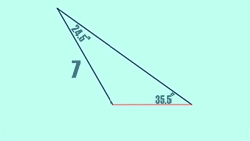







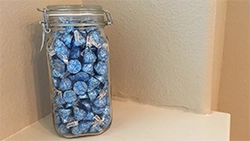
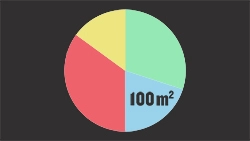
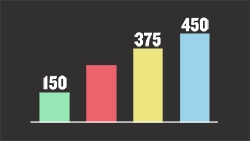
Showing 12 of 175 challenges
Built into every lesson
Estimation Isn’t a Side Dish
These challenges are a taste of how we teach. In our free Algebra 1 and Geometry curriculum, estimation is embedded in almost every lesson—students predict before they calculate, so the answer always has something to land against.
Grab the whole year, already sequenced and classroom-ready.
Free • Classroom-ready • No account required to browse
Lesson openers — a quick estimate to prime the day’s concept
3 Act Math tasks — students guess too-high and too-low before solving
Answer-checking — “is this reasonable?” becomes a habit
Daily Overview — estimation meets the wider world